When aerospace engineers look to reduce the weight of aircraft-interior components, the conventional approach often starts with optimizing an existing metal design. But what if the bigger opportunity is to rethink the material and manufacturing process altogether?
Complex brackets, fittings, attachments, seat components, and other interior structures have traditionally relied on aluminum, titanium, and steel to deliver the strength and performance aerospace applications demand. That familiarity can come with a hidden tradeoff: designing around the limitations and weight of metal may prevent engineering teams from realizing the full lightweighting and design potential of the component.
Carbon-fiber reinforced thermoplastic composites offer a different approach. Rather than viewing the design decision as simply metal or composite, engineers can rethink where metal is actually needed within the component and where a high-performance composite can provide greater design and lightweighting advantages. Hybrid designs that integrate metal into a composite component can further expand the possibilities for complex aerospace applications.
Greene Tweed’s Xycomp® DLF™ discontinuous long fiber composites combine aerospace-grade carbon fiber with high-performance thermoplastics and matched-die compression molding to create complex-shape components with excellent strength-to-weight ratio, impact performance, thermal stability, chemical and environmental resistance, and galvanic corrosion mitigation.
The potential difference is significant. Xycomp® DLF provides a 43% density reduction versus aluminum, 65% versus titanium, and 80% versus steel, leading to typical application weight savings of 35% or more versus aluminum and greater than 50% versus titanium or steel. The material also meets relevant FAA/EASA burn-test and flame, smoke, and toxicity requirements for aircraft-interior applications.
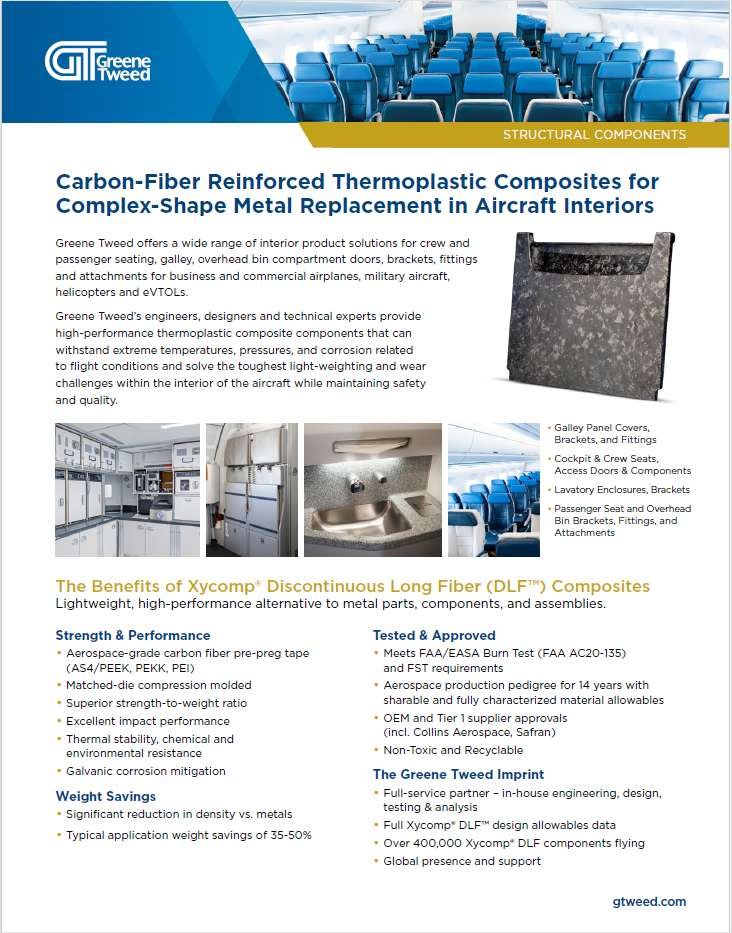
This resource explores how carbon-fiber reinforced thermoplastic composites can provide new design possibilities for reducing reliance on metal across aircraft-interior applications, including seating, galleys, overhead bins, lavatories, access doors, brackets, fittings, and attachments. Download the resource to see where rethinking material selection and component design could uncover lightweighting opportunities that optimizing a conventional metal design may not.